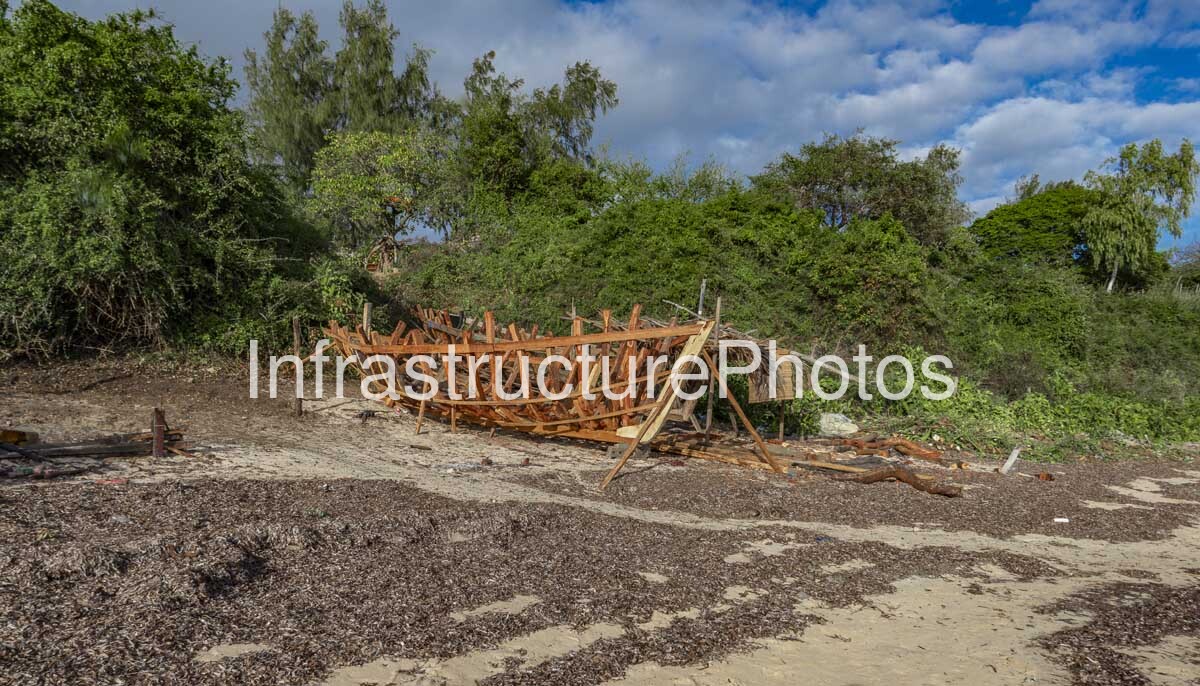
This photograph captures a traditional wooden dhow under construction on the shoreline at Vilanculos, Mozambique, offering a rare and valuable glimpse into the craftsmanship behind the fishing boats that have long been associated with the coastal communities of the region. Rather than photographing a completed vessel on the water, the image focuses on the boat’s exposed wooden framework, revealing the ribs, supports and developing hull before the outer planking has been completed. The unfinished structure provides an unusually detailed view of traditional boatbuilding techniques and illustrates how these working vessels are constructed largely by hand.
The boat occupies the centre of the composition, standing on timber supports above the sandy shoreline. Its open framework clearly reveals the construction of the hull, with numerous curved wooden ribs forming the structural skeleton and longer timbers running along the length of the vessel. The bow has already begun to take shape, while sections of the hull remain open, exposing the internal structure. Individual pieces of timber, tools and construction materials are scattered around the site, reinforcing the impression that this is an active boatbuilding area rather than a preserved historical display.
Traditional dhow construction remains an important part of the maritime culture of Vilanculos. Historical documentation of the Vilanculos Coastal Wildlife Sanctuary specifically identifies traditional boatbuilding as an important element of local cultural heritage. Wooden dhows have continued to be made using traditional techniques, with ribs and structural components shaped by hand and attached to the hull using combinations of wooden dowels and nails. More recent local documentation also describes dhows in Vilanculos as working boats that continue to be constructed by hand using locally sourced hardwoods.
The exposed skeleton of the vessel makes the photograph particularly interesting from an architectural and technical perspective. Before the hull is enclosed, the relationship between the individual structural components can be clearly seen. The ribs establish the shape and strength of the boat, while longitudinal members help form the framework onto which the exterior planking will eventually be fixed. This construction process represents a form of vernacular engineering developed through generations of practical experience rather than through modern industrial production.
The surrounding beach provides further context. Seaweed and organic material have accumulated across the sand, while dense coastal vegetation rises immediately behind the boatbuilding area. A simple thatched shelter appears beside the vessel, suggesting a modest working environment where materials and tools can be stored or workers can take shelter from the intense coastal sun. Timber sections lie on the ground around the hull, indicating that the boat is being assembled from individually prepared pieces rather than manufactured from prefabricated components.
Vilanculos is particularly significant for this tradition because of its close relationship with the Bazaruto Archipelago. The town functions as a major mainland gateway to the islands, and traditional dhows remain part of both local fishing activity and marine tourism. The boats are used by local fishermen as working vessels and also form an important part of the region’s tourism experience, with traditional dhows operating trips into the Bazaruto Archipelago.
29 MB
Reviews
There are no reviews yet.