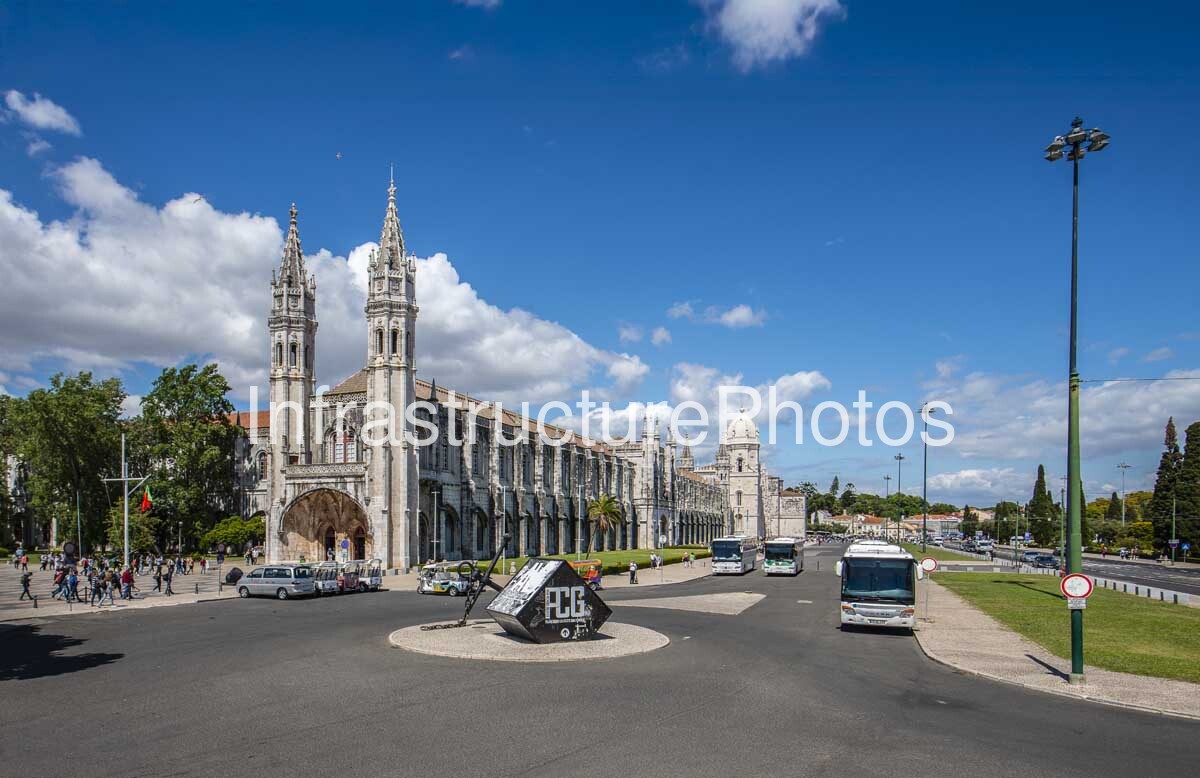
The Jerónimos Monastery (Mosteiro dos Jerónimos) is one of Lisbon’s most celebrated architectural landmarks and one of the defining monuments of Portugal’s Manueline architectural tradition. Located in Belém beside the River Tagus, the monumental complex was commissioned by King Manuel I at the beginning of the 16th century and developed during a period when Portugal was emerging as a major maritime and trading power. Construction of the monastery began around 1501–1502 and continued for approximately a century, involving several generations of architects, master builders and craftsmen.
The building occupies a site with a strong connection to Portugal’s maritime history. Before the monastery was constructed, a small chapel stood here, associated with the Order of Christ and the maritime activities of Belém. The site is traditionally connected with Vasco da Gama, who is recorded as having prayed and kept vigil here before departing for India in 1497. King Manuel I subsequently commissioned a much larger monastery for the Order of Saint Jerome, whose monks were entrusted, among other duties, with praying for the king and providing spiritual assistance to sailors and navigators leaving from the nearby Tagus waterfront.
The architectural history of the monastery is unusually rich because responsibility for the project passed through several important Portuguese architects. Diogo de Boitaca initiated the principal design and directed the first major phase of construction between approximately 1502 and 1517. In 1517, João de Castilho took over the works and introduced further architectural and decorative developments, including important elements of the church and cloister. Later phases involved Diogo de Torralva, while Jerónimo de Ruão became master of the works in 1563 and was responsible for the final major stages of the complex.
The result is regarded as one of the supreme expressions of Manueline architecture, a distinctly Portuguese interpretation of late Gothic architecture incorporating Renaissance influences and an extraordinary vocabulary of maritime, religious and natural motifs. Ropes, knots, armillary spheres, shells, foliage, crosses and other carved forms are integrated into the building’s façades and portals. The architecture is simultaneously monumental and intensely detailed, with the pale local lioz limestone providing the material foundation for much of the intricate carving.
The church visible in this photograph is particularly impressive for its scale and verticality. Its long three-nave interior is covered by a unified, highly engineered vault supported by monumental octagonal pillars. The exterior presents a powerful horizontal composition, interrupted by the dramatic vertical emphasis of the two towers framing the principal entrance. The ornate façade combines sculptural decoration with structural elements in a way that makes the building appear almost carved from a single piece of stone.
The photograph also captures the monastery within the broader urban landscape of Belém. The expansive roadway in the foreground, landscaped lawns, distinctive green-painted street lighting and steady flow of buses demonstrate the continuing importance of this historic district as both a transport corridor and a major cultural destination. The monumental church dominates the scene, while the open sky and low surrounding development allow its towers and long stone façade to remain visually prominent.
At the centre foreground is a contemporary sculptural installation, providing an interesting contrast between the highly ornate 16th-century monastery and modern public art. The juxtaposition demonstrates how Belém has evolved into a living urban district in which historic architecture, tourism, public transport, landscape and contemporary interventions coexist.
The monastery’s importance extends well beyond architecture. It was designated a National Monument in 1907 and, together with the nearby Belém Tower, was inscribed on the UNESCO World Heritage List in 1983. Today, the complex remains one of Portugal’s most important cultural and architectural landmarks and an exceptional surviving expression of the country’s maritime and royal history.
19.5 MB
Reviews
There are no reviews yet.