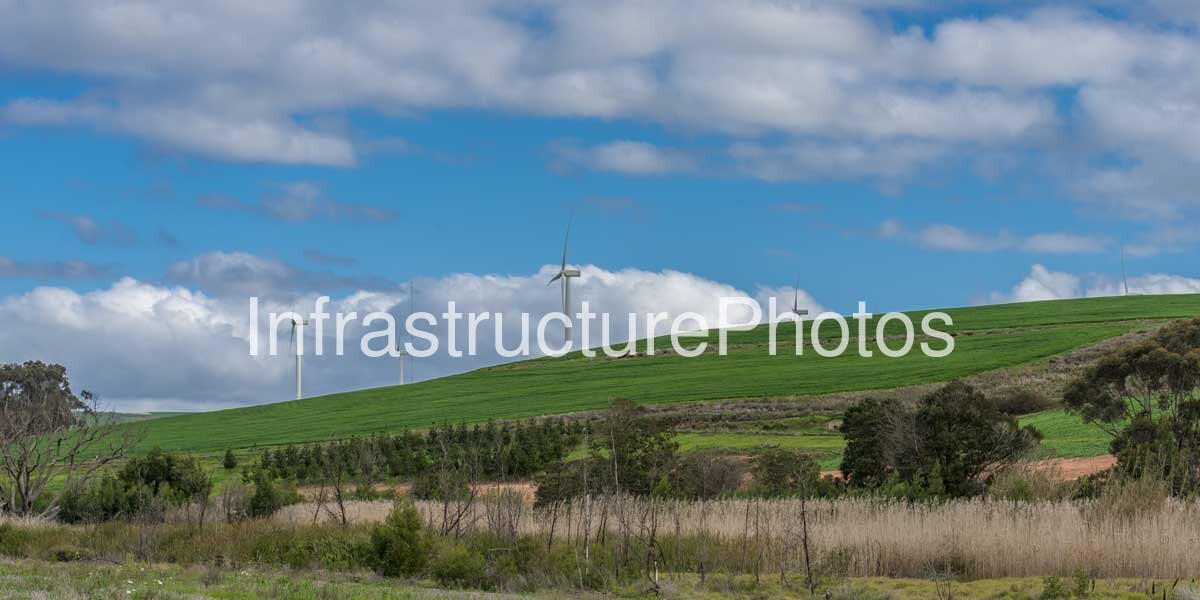
The Dassiesklip Wind Energy Facility is a landmark renewable-energy development located near Caledon in the Overberg region of the Western Cape, South Africa. The facility occupies an elevated rural landscape approximately 5 km west of Caledon, where large-scale wind turbines rise above cultivated agricultural fields and gently rolling hills. The setting combines modern energy infrastructure with the characteristic open landscapes of the Overberg, creating a distinctive visual relationship between renewable-energy technology and working farmland. Dassiesklip was selected during the first round of South Africa’s Renewable Energy Independent Power Producer Procurement Programme (REIPPPP), forming part of the country’s early transition towards utility-scale renewable electricity generation.
The facility was developed by BioTherm Energy, with construction involving Group Five, Iberdrola Ingeniería y Construcción and Sinovel Wind Group. It commenced commercial operation in May 2014 and remains an operating renewable-energy facility. The project connects into the regional electricity network through infrastructure associated with the Bacchus transmission area. Its development was significant in the early expansion of South Africa’s privately developed renewable-energy generation fleet and helped establish wind power as an important component of the country’s evolving electricity system.
Architect: Not publicly documented. Rather than conventional architecture, the facility is defined by the engineering design of its wind turbines, electrical infrastructure, access roads and associated civil works. Completed: 2014, with commercial operation beginning in May 2014. Architectural style: Contemporary industrial and renewable-energy infrastructure, characterised by tall, minimalist structures positioned across the natural landscape. Building use: Renewable electricity generation. The photograph captures the turbines standing prominently against a dramatic sky, with cultivated green and brown fields extending across the foreground and surrounding hills. The strong vertical forms of the turbines contrast with the horizontal agricultural landscape, illustrating how modern energy infrastructure can become a defining feature of South Africa’s rural environment.
13.61 MB
Reviews
There are no reviews yet.