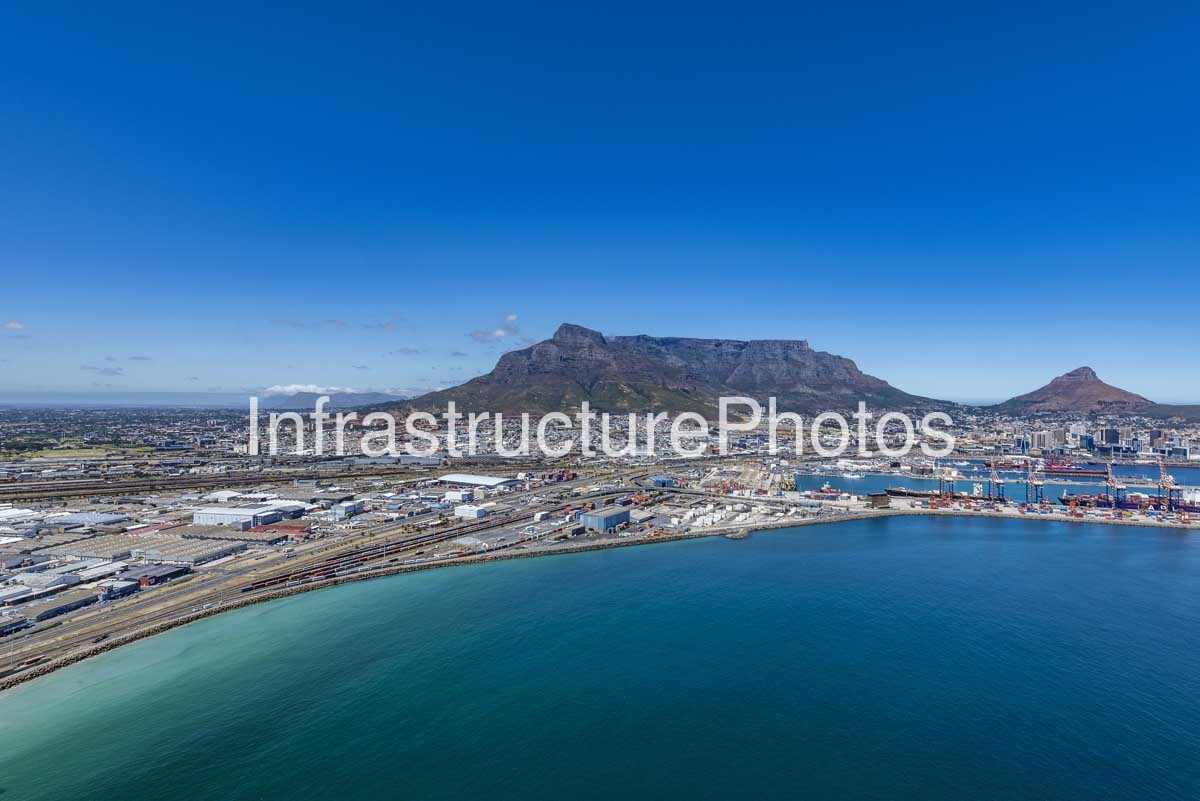
This aerial photograph captures the extensive rail, logistics and maritime infrastructure of the Port of Cape Town, looking across the harbour towards Table Mountain and the Cape Town Container Terminal. A dense network of railway tracks dominates the foreground and middle ground, connecting cargo-handling areas and terminals with the wider South African freight rail network. The Cape Town Container Terminal is visible to the right, with container cranes, stacked containers and vessels operating within Ben Schoeman Dock.
Rail has historically been integral to the development and operation of Cape Town’s harbour. The Cape Town Railway and Dock Company was established in 1853, forming part of the origins of South Africa’s modern railway and port system. Today, the Port of Cape Town remains strongly integrated with inland rail and road networks, with Transnet describing the port as having 178 km of rail track serving its various terminals and operations.
The container terminal, which dates its operations to 1977, is a major gateway for containerised cargo and is particularly important for the movement of fruit, fresh produce and other refrigerated products. The terminal has extensive rail connections to its hinterland, allowing cargo to move between the port and inland logistics centres.
The photograph illustrates the remarkable concentration of transport infrastructure around Cape Town’s harbour, with freight rail yards, industrial buildings, port roads, container-handling facilities and maritime berths occupying the foreground. Beyond the port, the dense urban landscape rises towards Table Mountain, creating a distinctive backdrop to one of South Africa’s most important logistics gateways.
Reviews
There are no reviews yet.