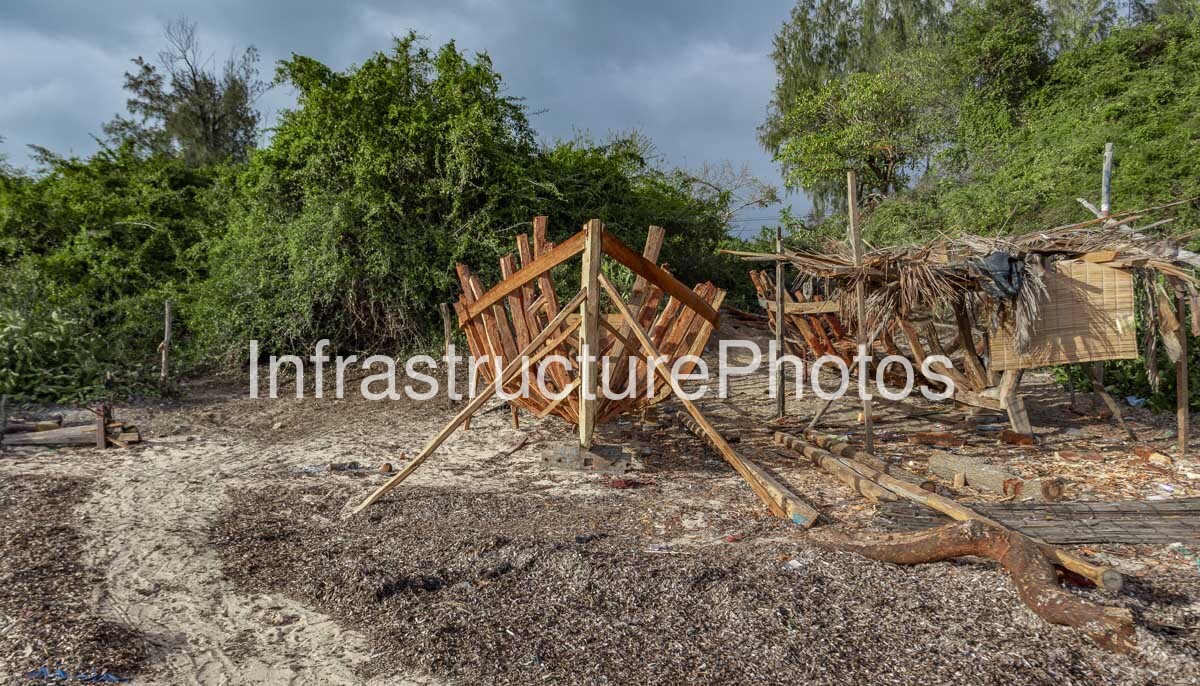
This photograph captures a traditional wooden boat-building site on the shoreline of Vilanculos, Mozambique, where locally constructed fishing boats form an important part of the coastal community’s maritime heritage. Located in Inhambane Province on the mainland opposite the Bazaruto Archipelago, Vilanculos is closely associated with traditional dhows, which remain in everyday use for fishing, transport and tourism.
The image provides a particularly detailed view of the traditional construction process. In the centre, an unfinished wooden hull stands in its supporting framework, revealing the ribs and structural members that will eventually form the body of the vessel. Behind it, another partially completed boat sits beneath a simple shelter made from timber poles and dried palm material. The setting is informal and entirely integrated into the coastal landscape, with construction taking place using basic tools, locally sourced materials and generations of practical knowledge.
Traditional dhows in Vilanculos continue to be built by hand, with local hardwoods used for their strength and resistance to seawater. The boats are not simply historical artefacts; they remain working vessels used by local fishermen and are also an important part of the tourism economy surrounding the Bazaruto Archipelago.
The photograph is especially effective because it documents the boat before completion rather than presenting the colourful finished dhows normally seen offshore. The exposed wooden ribs, rough-cut planks, temporary supports and unfinished surfaces provide an unusually intimate view of the craftsmanship involved. The accumulation of dried seaweed and organic material across the sandy foreground reinforces the relationship between the boatyard and the tidal environment.
29 MB
Reviews
There are no reviews yet.