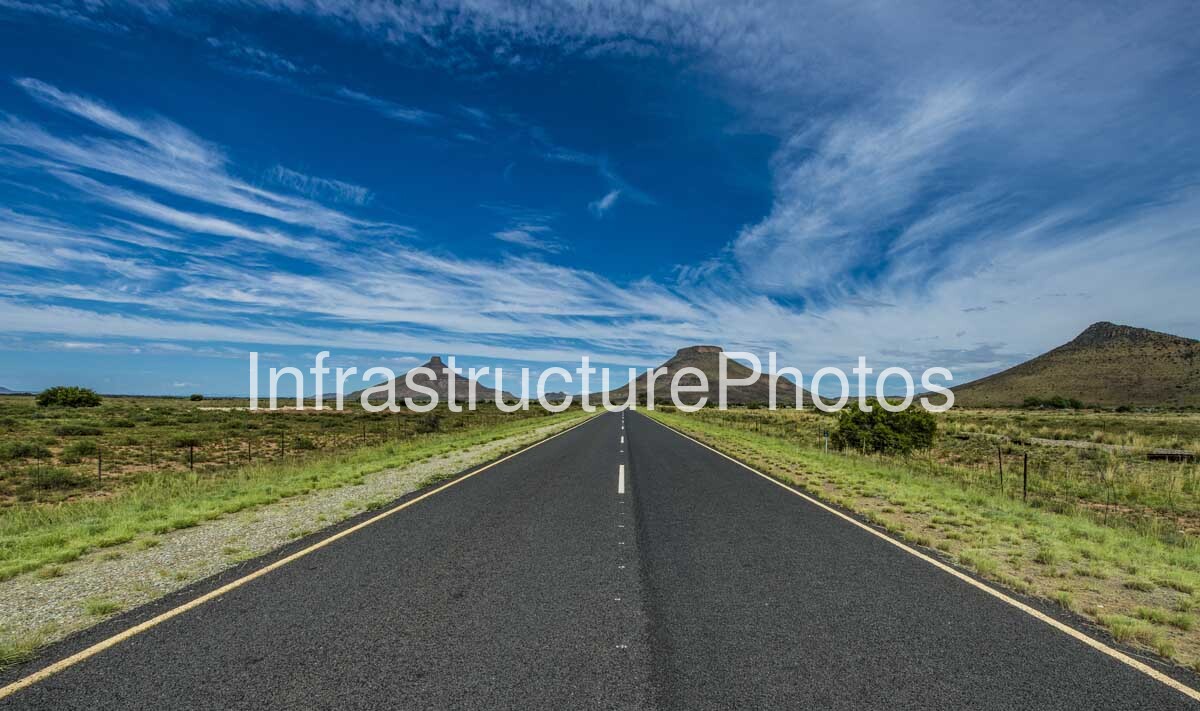
This photograph captures the iconic Teebus and Koffiebus koppies rising from the broad Karoo landscape along the R56 in the Eastern Cape, South Africa. The distinctive mountains are among the best-known geological landmarks in this part of the Karoo and create a dramatic focal point for travellers using the road between Middelburg and Steynsburg. The photograph looks directly along a beautifully surfaced section of the highway, with the road markings creating a strong leading line towards the mountains on the horizon. The expansive landscape, vivid blue sky and sweeping cloud formations emphasise the immense scale and open character of the Eastern Cape Karoo. Teebus and Koffiebus are widely recognised landmarks of the region, with the R56 passing between the two koppies.
Location: Eastern Cape Karoo, near Steynsburg, Eastern Cape, South Africa. Teebus is approximately 18 kilometres southwest of Steynsburg and about 35 kilometres north-northwest of Hofmeyr, placing the mountains within a sparsely populated agricultural landscape characterised by open grassland, scrub and extensive horizons. The R56 provides an important regional connection through this part of the Karoo and runs between the two landmark koppies.
The two formations have particularly recognisable silhouettes. Teebus, the more pointed formation, rises prominently from the otherwise relatively level Karoo plain, while Koffiebus has a broader, more flattened summit. Their unusual shapes have long attracted attention from travellers and have become closely associated with the identity of this part of the Eastern Cape. The names are traditionally linked to the resemblance of the formations to tea and coffee caddies used by early Dutch-speaking settlers. Sources differ in the precise description of the objects that inspired the names, but the association with tea and coffee containers is firmly established in regional accounts.
Geologically, the koppies are products of the remarkable geological history of the Karoo. Resistant dolerite formed when molten rock intruded between layers of sedimentary rock during the period of extensive volcanic activity associated with the breakup of Gondwana. Because the dolerite was more resistant to erosion than the surrounding material, remnants remained standing above the surrounding landscape as the softer rock was gradually worn away. The result is the characteristic isolated Karoo koppie landscape seen throughout portions of the region.
19.31 MB
Reviews
There are no reviews yet.