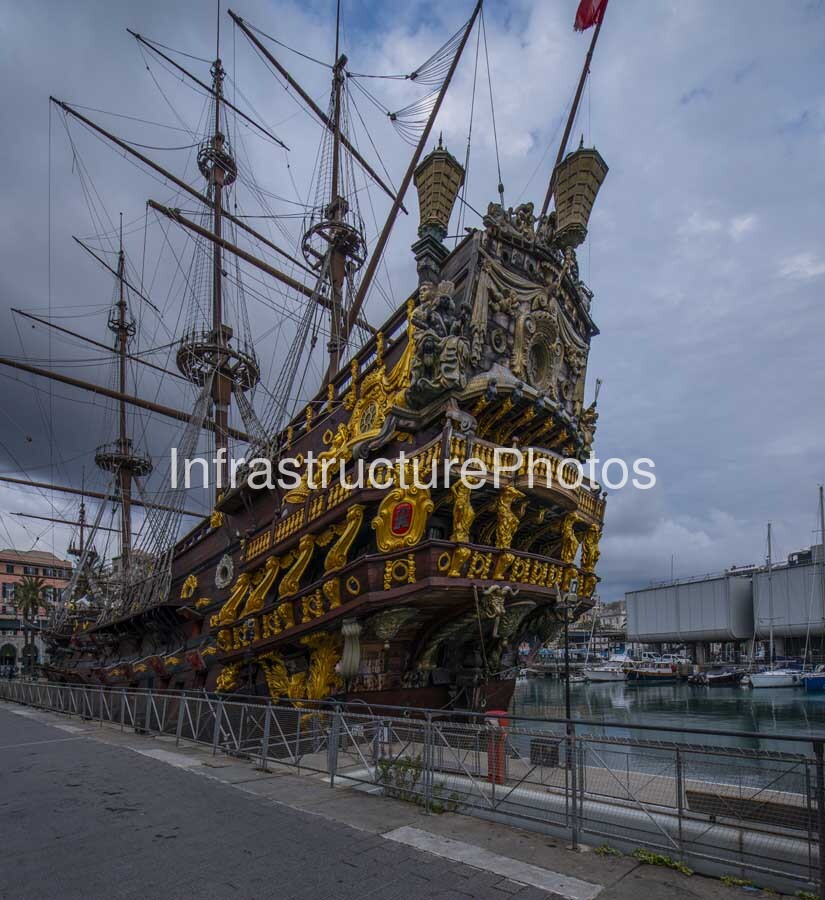
The Galeone Neptune is one of the most distinctive landmarks of Genoa’s Porto Antico, a spectacular full-scale replica sailing ship permanently associated with the city’s regenerated waterfront. This photograph captures the vessel from close range at Ponte Calvi, emphasising the extraordinary detail of its stern, ornate galleries, sculptural decoration, towering masts and complex rigging. With the ship occupying almost the entire frame, the image conveys the enormous scale and theatrical character of the Neptune, while the modern port infrastructure and Genoa’s waterfront appear behind it.
Despite its convincing historic appearance, the Neptune is not an original seventeenth-century vessel. It was purpose-built in Tunisia in the mid-1980s as a full-scale film set for Roman Polanski’s 1986 adventure film Pirates. Construction took place at the Port El Kantaoui shipyard near Sousse, with the vessel designed to represent a highly elaborate Spanish sailing ship of the seventeenth century. The ship was constructed as a functioning, seaworthy vessel rather than simply as a static film prop. Its underwater hull is steel, while the visible hull, superstructure and masts were constructed to reproduce the appearance of a historic wooden sailing vessel.
The scale of the Neptune is particularly impressive. The vessel is approximately 50 metres long and rises around 35 metres above the water, with an enormous quantity of rigging and sail-handling equipment. Visit Genoa describes approximately 20 kilometres of rigging weighing around 11 tonnes, together with a sail area of approximately 4,500 square metres. The combination of towering masts, yards, ropes, galleries and elaborate carved decoration gives the ship an exceptionally dense visual presence. In this photograph, the rigging spreads across the sky like an intricate web, providing a dramatic counterpoint to the massive decorated stern.
The stern is the most visually spectacular part of the vessel. Elaborate golden ornamentation covers the galleries and decorative elements, while carved figures, scrollwork, shields and maritime motifs reinforce the impression of an extravagant Age of Sail warship. The stern architecture was deliberately exaggerated for cinematic effect, creating the kind of monumental vessel that would immediately communicate wealth, power and adventure to an audience. Its decoration is therefore as much theatrical design as historical reconstruction.
The Neptune’s connection with cinema is central to its story. The ship was constructed specifically for Pirates, which was filmed primarily in Tunisia. Following completion of the production, the vessel eventually became permanently associated with Genoa and was installed in the city’s Porto Antico. Today it is recognised as one of the symbols of the regenerated waterfront and remains a major visitor attraction.
Its arrival in Genoa created an unusual relationship between cinematic fantasy and the city’s authentic maritime heritage. Genoa has been one of the Mediterranean’s most important maritime cities for centuries, and its historic port was once dominated by merchant shipping, naval activity, shipbuilding and international trade. The Neptune is not itself part of that historic fleet, but its presence deliberately reinforces the maritime identity of the Porto Antico. The ship’s dramatic appearance provides a powerful visual representation of the seafaring history that defines Genoa, even though the vessel itself dates from the twentieth century.
The location is particularly significant. The Neptune is moored in the Porto Antico close to the Aquarium of Genoa and the Galata Museo del Mare, placing the cinematic replica within a waterfront district dedicated to the city’s relationship with the sea. The surrounding regeneration, substantially reshaped under the direction of Renzo Piano for the 1992 celebrations, transformed the old harbour into a major public, cultural and tourist destination. The Neptune therefore forms part of a broader landscape where historic maritime heritage, contemporary architecture, leisure facilities and working harbour infrastructure coexist.
18 MB
Reviews
There are no reviews yet.